
Soap is soluble in both oil and water because it has a polar end that is attracted to the ionic character of water, and a nonpolar end that mixes easily with the covalent compound of oil (read all about it in the 1-Minute Marvels "Soap opera").
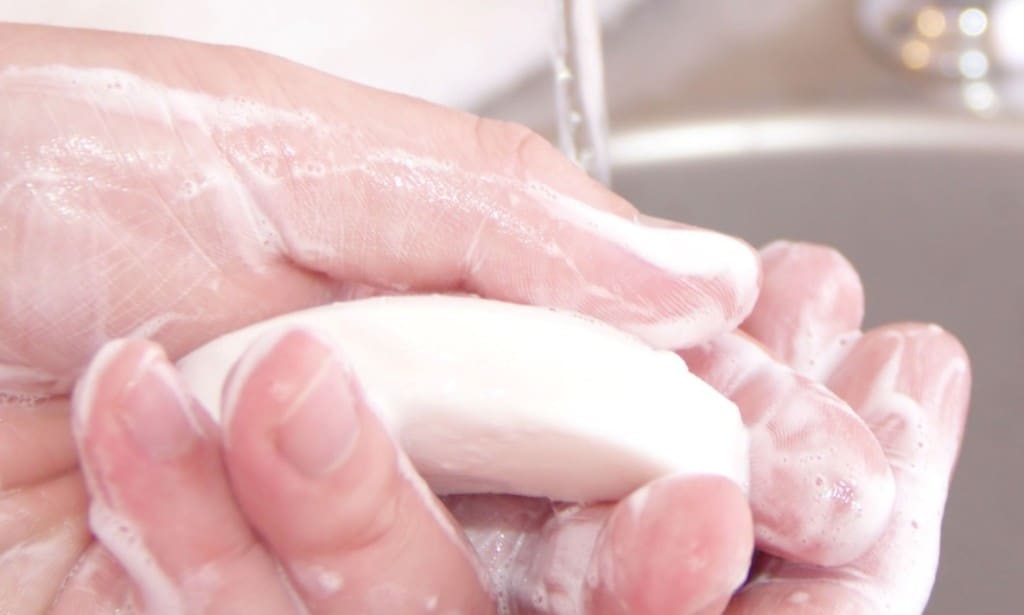
When we wash dirty dishes with soap, the water that runs off pulls the soap molecules along. The soap molecules in turn pull the oil along, and - cowbunga! - we have clean plates!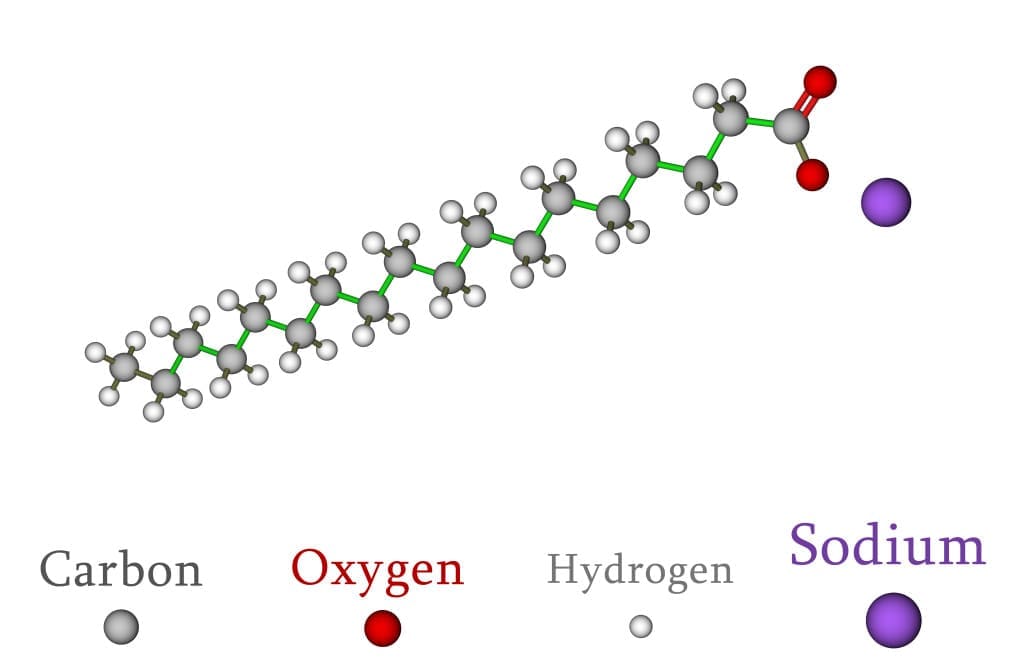
It is able to do this because its major ingredient is sodium stearate. To get sodium stearate, we start with with a fatty acid. Fatty acids are “building blocks of fat in our bodies.” Specifically, we want a fatty acid called stearic acid. The stearic acid molecules group together in threes to form something called triglycerides.
These triglycerides of stearic acid are then reacted with the alkali, sodium hydroxide (NaOH), to give us sodium stearate:
(C18H35O2)3C3H5 + 3NaOH → C3H5(OH)3 + 3C18H35NaO2
in words:
triglyceride of stearic acid + sodium hydroxide → glycerol/gylcerin + sodium stearate
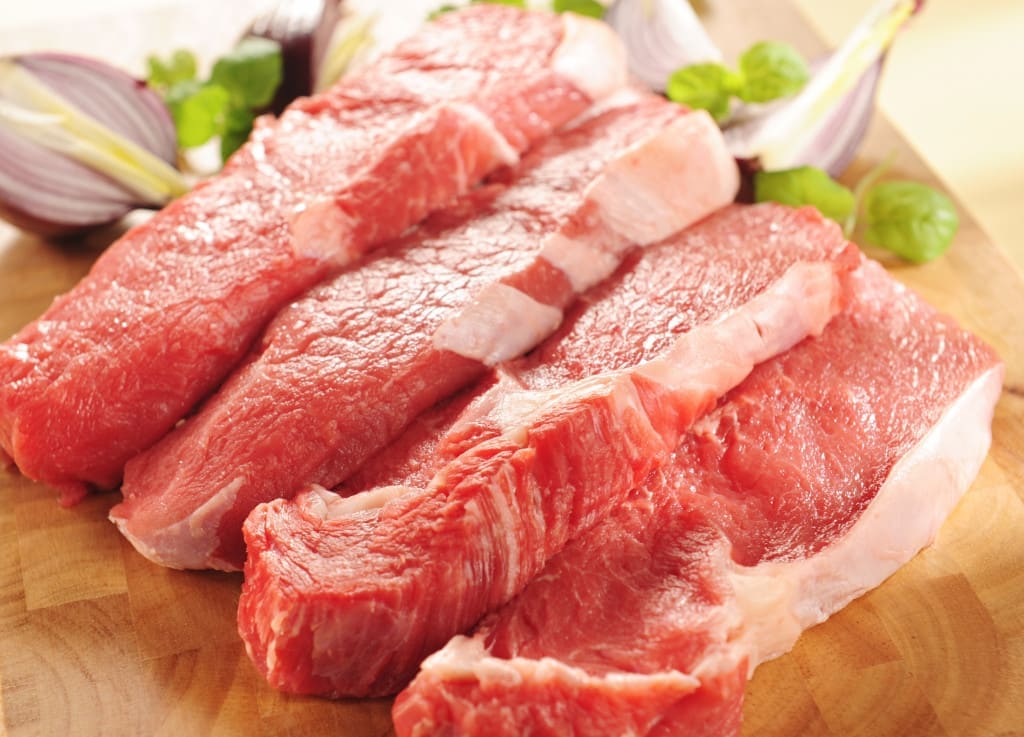
From the reaction, we can see that the stearic acid triglyceride we start with is important. While both animal fats and vegetable oils can be the source of such triglycerides, it has been found that the fats from cows are ideal because it contains one of the highest stearic acid content.
To get the triglycerides for the reaction, the fat from the cows (or any animal for that matter) is boiled and strained to form a hard fatty substance called tallow. The sodium stearate that results from the reaction is white, which explains why so many of the soaps you see are white.
photos: in order - istockphoto/LuckyNastia; depositphotos/electropower; Utiwamoj; SailanaLNT