
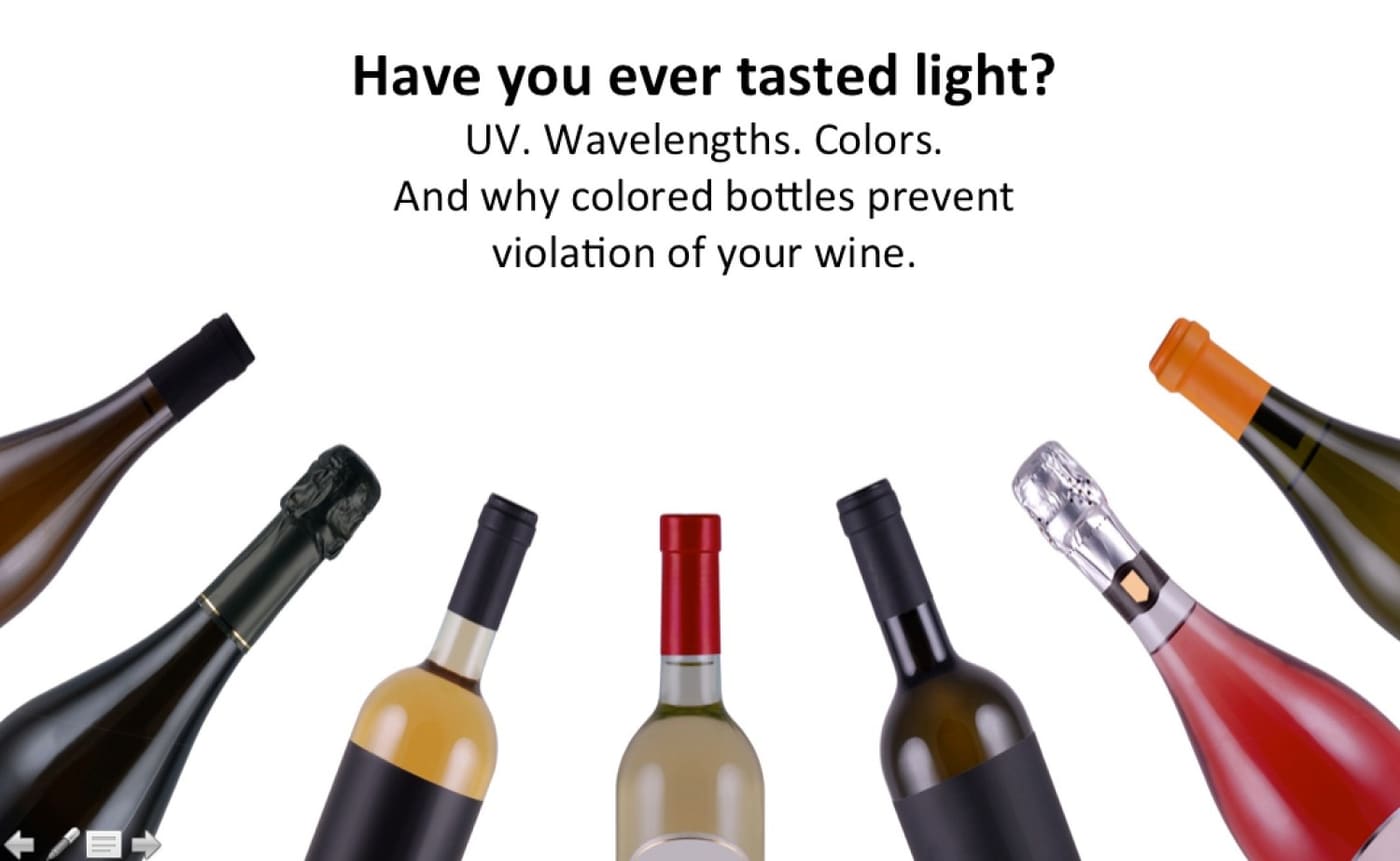
Light passes through glass easily and thus a glass bottle, for example, looks transparent (read why in this 1-Minute Marvels "The glass light-hows"). But this is not always the case for other forms of electromagnetic radiation along the electromagnetic spectrum.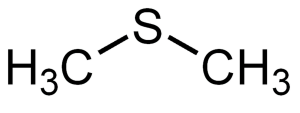 One such electromagnetic radiation is UV light, which has wavelengths between 10nm and 400nm. UV wavelengths of 300nm and below are stopped by glass, but wavelengths above that can react with the wine’s dimethyl sulfide (see right). The reaction produces sulphurous compounds that affect the taste of the wine, making it taste like a wet sweater.
This is called “lightstrike” (excessive exposure to UV in the 325-450nm range), which the French call “goût de lumière” i.e. taste of light.
 Colored glass bottles mitigate this. Different colors permit different wavelengths to pass through. Green glass, for example, blocks 30% of UV wavelengths around 370nm; amber glass, on the other hand, shields the glass across the entire UV spectrum (up to 450nm). Using colored glass bottles plays a part in maintaining the quality of the wine inside (and you can find out how the glass bottle became colored in this 1-Minute Marvels "Colors of the vino").
In addition, when buying wines that you don’t intend to consume soon, consider getting those in colored bottles. Also avoid buying bottles that have been exposed to more than their fair share of UV light e.g. the top of the shelves facing a light source.
photos: in order - depositphotos/Albo73; araraadt; goccedicolore